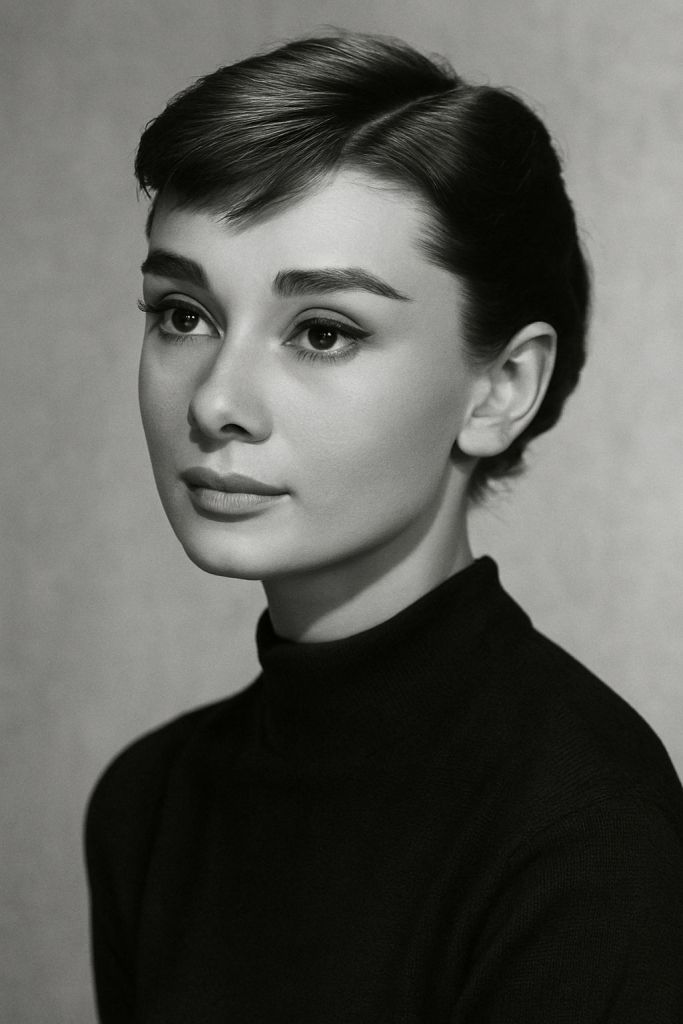
Audrey Hepburn: The Eternal Icon of Elegance and Compassion
When one thinks of elegance, grace, and timeless influence, Audrey Hepburn is among the first names to come to mind. Celebrated as one of the most iconic actresses in Hollywood history, she was not only a star of the silver screen but also a humanitarian, a fashion legend, and a symbol of compassion. From the dazzling lights of Hollywood to the impoverished villages of Africa, Audrey Hepburn’s journey is one of resilience, grace, and unshakable kindness.
In this comprehensive feature, we delve deep into Audrey’s multifaceted life — her rise to stardom, her fashion legacy, her humanitarian mission, and why she continues to be regarded as a timeless icon across generations.
Early Life and Humble Beginnings
Audrey Kathleen Ruston was born on May 4, 1929, in Brussels, Belgium, to a British father and a Dutch mother. Her early childhood was marked by instability, especially during the Nazi occupation of the Netherlands in World War II. These years of scarcity and fear instilled in her a profound empathy for others — a trait that would later shape her life’s mission beyond fame.
Despite living through war and hunger, Audrey found solace in dance. She studied ballet at the Arnhem Conservatory, later continuing her training in London. Though her dreams of becoming a prima ballerina were ultimately hindered by wartime malnutrition, ballet instilled in her a lifelong sense of poise, discipline, and grace.
From Ballet to the Big Screen: Audrey’s Ascent to Stardom
After the war, Audrey transitioned to acting, initially taking on small roles in British films and theatre productions. Her big break came when she was cast in Roman Holiday (1953) alongside Gregory Peck. Her portrayal of a runaway princess was refreshing, charming, and utterly authentic — earning her an Academy Award for Best Actress.
This role redefined what it meant to be a leading lady in Hollywood. Unlike the sultry bombshells that dominated the era, Audrey brought a unique blend of innocence, sophistication, and intelligence. She became a symbol of natural beauty and authenticity, resonating with audiences worldwide.
Hollywood Royalty: Iconic Films and Performances
Throughout the 1950s and 60s, Audrey Hepburn starred in a series of critically acclaimed and culturally impactful films:
Breakfast at Tiffany’s (1961) — The film that solidified her status as a fashion icon, where she embodied the character Holly Golightly in the unforgettable little black dress by Givenchy.
Sabrina (1954) — A charming blend of romantic comedy and drama.
My Fair Lady (1964) — A stunning performance showcasing her versatility in a musical setting.
Funny Face (1957) — Pairing her with Fred Astaire in a love letter to fashion and dance.
Charade (1963) — A stylish thriller co-starring Cary Grant.
Each role added depth to her legacy, and her performances were marked by a lightness of spirit, a deep emotional intelligence, and a quiet strength.
Audrey Hepburn’s Fashion Legacy
Audrey’s fashion sense was revolutionary. In a time of excess and glamour, she embraced minimalism, refinement, and elegance. Her collaboration with Hubert de Givenchy defined her public image — he designed many of her most iconic looks both on and off screen.
Some signature Audrey styles include:
The little black dress in Breakfast at Tiffany’s
Slim black trousers and ballet flats
Crisp white shirts and trench coats
Sophisticated updos paired with soft eye makeup
Her style was never about following trends — it was about embodying character, simplicity, and effortless grace. Today, designers and celebrities still cite her as a major inspiration, and fashion magazines routinely rank her among the best-dressed women of all time.
Personal Life and Inner Strength
Behind the spotlight, Audrey Hepburn’s life was deeply personal, at times difficult. She experienced failed marriages — first to actor Mel Ferrer, then to Italian psychiatrist Andrea Dotti — and health complications throughout her life. Yet, she never allowed personal struggles to diminish her light.
She was a devoted mother to her two sons, Sean Ferrer and Luca Dotti, and found joy in simple pleasures: gardening, reading, and spending time with her family in the Swiss countryside.
Audrey the Humanitarian: A Voice for the Voiceless
In the 1980s, after stepping away from acting, Audrey Hepburn found her greatest role: that of a humanitarian. As a UNICEF Goodwill Ambassador, she traveled extensively to some of the world’s most devastated areas — including Ethiopia, Sudan, Somalia, and Bangladesh.
Her work was not symbolic; she actively participated in missions, comforted children, and used her influence to raise global awareness about poverty, malnutrition, and child suffering. Her dedication was sincere and selfless — she once said:
> “People in these places don’t need pity — they need help.”
In 1992, just months before her death, she was awarded the Presidential Medal of Freedom, one of the United States’ highest civilian honors, in recognition of her humanitarian efforts.
Audrey in the Public Eye: Media, Art, and Adoration
Audrey Hepburn remains a cultural touchstone. Her face graces murals, postage stamps, and coffee mugs. Art installations around the world pay tribute to her style and spirit. Countless biographies, documentaries, and exhibitions have been dedicated to her life.
Even in today’s digital world, her Instagram-worthy images, vintage clips, and film scenes continue to be shared and admired, proving that her allure is eternal.
Influence on Modern Celebrities
Audrey’s influence is unmistakable in the careers and public personas of many modern celebrities. Stars like Natalie Portman, Emma Watson, and Zendaya have all been compared to Audrey for their mix of intellect, style, and substance. Fashion brands still create collections inspired by her, and stylists continue to draw upon her minimalist aesthetic.
Her emphasis on inner beauty, humility, and kindness is echoed by many women today who seek to balance fame with authenticity.
Inspirational Quotes from Audrey Hepburn
> “Elegance is the only beauty that never fades.”
“The best thing to hold onto in life is each other.”
“For beautiful eyes, look for the good in others; for beautiful lips, speak only words of kindness.”
“Nothing is impossible. The word itself says ‘I’m possible!’”
“I believe in being strong when everything seems to be going wrong.”
“To plant a garden is to believe in tomorrow.”
“As you grow older, you will discover that you have two hands — one for helping yourself, the other for helping others.”
These timeless quotes not only reflect her personal values but align perfectly with the spirit of Sampira Magazine — wisdom, elegance, and depth.
Legacy: Why Audrey Hepburn Remains a Timeless Legend
What makes Audrey Hepburn a Timeless Legend is not just her on-screen charm or her flawless fashion. It is the way she lived her life — with purpose, dignity, and generosity. Her legacy is multi-dimensional:
A cinematic legend who changed Hollywood’s definition of beauty.
A fashion icon whose style endures in every generation.
A humanitarian who left the world better than she found it.
She teaches us that true elegance is a reflection of kindness, strength, and compassion — a message that continues to shine brightly in a world that often celebrates the superficial.
Conclusion
Audrey Hepburn’s story is a symphony of elegance, empathy, and empowerment. She invites us to live purposefully, to act with grace, and to remember that our greatest impact lies not in how we look, but in how we treat others.
In the words of Sampira:
“Shine with your knowledge and stand out with your taste.”
Audrey did exactly that — and she remains, forever, a beacon of timeless beauty and a true legend.
 Sampira
Leave a comment